Wednesday, June 18, 2008

High Gas Prices


How have the gas prices affected you? These days everybody is fed up with the rising gas prices. It's not just that it seems so wrong to have the prices be so high. It's that it affects us in every aspect of life. Because of the high prices, we see airline prices going up, food prices going up, consumer prices going up.
As I was reflecting on the affect it has had on my own life, I realize that it has caused me and my family to make some changes. My wife and I are regularly trying to work out our schedule so that we can use one car at times, instead of two. This makes it difficult, because we often have different schedules and places to be. And even though we seek to live on a budget, most of our spending money goes to money for gas, instead of going out to eat, or driving somewhere for an outing. And while spending time at home can be a healthy family discipline, it can be a bit much some times.
The high gas prices is causing a lot of anger these days. You might have read the article of the Danville woman who was accused of setting 2 gas stations on fire in protest. There are gasoline protest meeting groups online. There are attempts to hurt the gas companies (like the effort to encourage people not to buy gas from a particular company, or on a particular day). Or how about Bob Oyster, who was told by Shell he was going to have to pay higher prices for the gas, so he jacked up the price well over $4.00 (that was when it was selling in the mid to high $3.00 range). He did this to make a statement. As Oyster says: "I got fed up. It makes a statement, and I guess when people see that price they also see the Shell sign right next to it.''
While things are tight financially, I am still able to pay for gas. But that doesn't mean I want to give all my money to the oil companies. And what about those who can't afford the gas anymore? What are we to do? I'm not sure I have the answer, but I do know that as consumers, we CAN make a statement by trying to limit our gas purchases. After a while, it WILL begin to send a loud statement to the oil companies. By doing this, we also are seeking to be good stewards of the money we do have.

I ask again, how have the gas prices affected you?

Wednesday, June 11, 2008

Turning Bad Into Good


Life is full of bad experiences. Bad things happen all the time, to good people as well as bad. Bad things can even happen to Christians. There are many who wonder why God doesn't protect them from the bad things in our world. But think about this, the bad things that happen to us are either our own doing, or a product of the bad in our world.
First, we sometimes create the bad which happens to us. We don't always make good decisions, and some of our decisions lead us into situations that cause bad to come to us. Those who choose to smoke will have to deal with this addiction (maybe for a lifetime), and for some they will get cancer and die. If you choose to lie, and get caught in your lie it can cause you trouble. If you go out for dinner all the time, even though you don't have the money, you might find yourself short when it comes time to pay the bills. Our bad choices cause bad to come into our lives.
Second, sin creates bad things in our world. Romans 3:23 tells us, "For ALL have sinned and fallen short of God's glory." You don't have to read far into the newspaper to see all that bad that exists in our world; war, rape, robbery, kidnapping, drugs, gangs, and on and on I could go. Since we live in this world, there are times when this bad affects us and impacts our world. Maybe you don't live in a safe neighborhood, maybe something bad like this has happened to you, maybe you are afraid to go out into the world.
But there is good news. God wants to bring good out of our bad. Romans 8:28 tells us, "And we know that in all things God works for the good of those who love him, who have been called according to his purpose." The Bible promises us that when we trust God, God can take the bad that has happened in our lives and work out good from it. I know that in my own life, the struggles I have gone through have taught me important lessons, or prepared me for something else I was going to do in my life later on.
There is an interesting process that you can go through that helps you to discover this. What you do is get a bunch of yellow and pink sticky notes. On the yellow sticky notes write all the good that has happened in your life, and on the pink sticky notes write all the bad things that have happened. Then put them in chronological order. When you read through your time line in this way, you will discover that much of the good that has happened follows the bad; God used the bad to prepare you for the good that was to come.
So, what should you do? Trust yourself to God. Believe that God will bring good out of your bad. Don't give up living. Be passionate about life.

Wednesday, June 04, 2008

Childlke Faith


In Matthew 18:1-5 Jesus says, "At that time the disciples came to Jesus and asked, "Who is the greatest in the kingdom of heaven?" 2He called a little child and had him stand among them. 3And he said: "I tell you the truth, unless you change and become like little children, you will never enter the kingdom of heaven. 4Therefore, whoever humbles himself like this child is the greatest in the kingdom of heaven. 5"And whoever welcomes a little child like this in my name welcomes me." Here we have a situation where the disciples were wanting to be great. We see ego; pride; selfishness. Jesus surprises them with these words.
What is Jesus saying here? Greatness comes not from physical strength, but from spiritual strength; a humility of spirit. Kids are humble. They believe what you say. They are not hard hearted. They are persistent. They believe in miracles. They have a capacity for wonder. And if we are going to be great, then we need to have a childlike faith.
When we do not have a childlike faith, we try to be in control. We think that we have to have all the answers. We think that we need to take care of all of our needs. We think that we have enough strength to do what needs to be done. But in the end, we become predictable, because we usually do what is expected of us to do.
Predictability and faith cannot coexist. What characterized Jesus (and ultimately His disciples) was unpredictability. The things Jesus said and the things Jesus did was always surprising those around Him. He ate with sinners, hung around tax collectors, prostitutes, and lepers, and healed people on the Sabbath. In fact, when Jesus was present, everyone was uncomfortable because they didn’t know what to expect.
This is what childlike faith does for us; it leads us to do the unexpected because when we follow God's leading, it usually is not what is expected. I know in my life when I follow my lead, it is nothing new or profound, but when I have faith like a child and trust Jesus, then it is very profound.
I challenge you to think about how you can be more childlike in your faith. What do you need to do differently? Where do you need to let go? Where do you need to trust more? What miracle do you need to ask God for?

Thursday, May 29, 2008

Spiritual Warfare

Have you ever wondered why people attack you? Do you feel like you have extra trials? Are you having trouble in your relationships? Do you feel depressed? These issues can all be related together by the issue of spiritual warfare. As the apostle Paul tells us in Ephesians 6:12- "For our struggle is not against flesh and blood, but against the rulers, against the authorities, against the powers of this dark world and against the spiritual forces of evil in the heavenly realms. "
Often times we are attacked because people are attacking God. They do this without knowing the deeper issue. This can especially happen when we seek to step out for God, and in our serving God, or doing the work of God, attack will come our way. And in these times, we can let ourselves feel beaten down and frustrated, or we can walk in the light of God (John 1:9- "The true light, which enlightens everyone...").
We need to understand that Satan is real and trying to disrupt our lives; Satan is trying to keep us from the joy of the Lord. In his book "The Screwtape Letters," C. S. Lewis talks about this attempt to derail our lives from God. It is a wonderful rendering of the deceitful ways in which Satan tries to blind us to the reality of how beneficial it is to live in the love and presence of God, instead of following the ways of the world. As Satan attacked Eve so deceitfully, he seeks to confuse and disorient us into letting the temptations of the world and trials of life overwhelm us.
When we walk in the light, we put ourselves in a place to have the armor of God available to us: "13Therefore put on the full armor of God, so that when the day of evil comes, you may be able to stand your ground, and after you have done everything, to stand. 14Stand firm then, with the belt of truth buckled around your waist, with the breastplate of righteousness in place, 15and with your feet fitted with the readiness that comes from the gospel of peace. 16In addition to all this, take up the shield of faith, with which you can extinguish all the flaming arrows of the evil one. 17Take the helmet of salvation and the sword of the Spirit, which is the word of God. 18And pray in the Spirit on all occasions with all kinds of prayers and requests. With this in mind, be alert and always keep on praying for all the saints."
We are called to stand firm in what God gives to us. When we live in this way, we can live in the joy of the Lord as we know that we are strengthened by our faith, our righteousness (which comes to us by Christ), the Bible, our salvation, and prayer. We can indeed overcome the struggles of life, and learn to enjoy life in the midst of life's difficulties.

Wednesday, May 21, 2008

Marriage is Sacred


Marriage is an interesting concept in today's society. I believe that people are losing the understanding of what marriage is to be. It has become too easy for people just to live together, or sleep together without any thought of love or commitment. By doing it this way, you don't have to make a commitment; you can just end the relationship when things don't seem to be going right. How have we gotten to this place where people don't want to make a commitment to another person?
If you were to look at the concept of marriage, it began at creation when God saw that "it was not good for the man to be alone." So in seeing Adam in this state, God created Eve. By giving Adam, Eve, and giving Eve, Adam, God created a partnership. But this partnership was to be deep and bonding; the two becoming one.
Marriage is more than just having someone around to keep you company. Marriage is more than having someone around to fulfill your needs. Marriage is a sacred act of commitment and binding together that God has instituted and given to us. If and when we go into a marriage relationship, we should do it with the understanding that we are pledging our love and faithfulness to this other person for life. When we commit to each other in this way, there is actually more freedom, because we don't have to worry about jealousy or mistrust; we have given our binding word to our partner.
Think about the beauty of the picture of 2 becoming one. Together we forge with another person a world, a life, that is bound together. If you have ever seen a couple that has been married for many years, they often finish each other's sentences, and often times begin to look life each other. This is the two becoming one. There is a depth and intimacy to the relationship that is unique and beautiful.
As a minister, when I do wedding counseling, I try to help the couple understand that this is to be a lifelong, sacred commitment that is made. It shouldn't be made just on feelings or in hurriedness. It is a commitment that they make to each other, but also to God. What a joy it is for me to do a wedding for 2 people who get this concept of sacred bond.
What do you think?

Wednesday, May 14, 2008

Experiencing God's Love


We hear people talk of God's love all the time, but probably don't think about it too much. Then the other day I was at a seminar, where the speaker talked about a class that Bishop Desmond Tutu was going to teach; the class was to be on God's love. As the class gathered, Tutu had no syllabus for the class. This concerned the students; how would they know what was required of them? Tutu preceded to tell them that there were no tests, quizzes or assignments. In the end, the class was to be about them sharing stories of where they had experienced God's love. Tutu's reasoning was that we can't share God's love until we understand how God has loved us.
As I thought about this question (Where have I experienced God's love?), I found it difficult at first to come up with an answer. I knew that I had experienced God's love, but couldn't come up with specifics. So I started to think more about how God has expressed His love to me. As I thought about this, I realized that I needed to define how God's love comes into the world, and into my life.
Here are a couple examples:
The first is how I met my wife. When I was in my early twenties, all of my friends were getting married. I very much wanted to be married and have kids, but couldn't seem to find the person God had for me. When I was 28 and very committed to my ministry, I told God that if I never got married, then I would dedicate myself to ministry. At this point, I stopped worrying about being married. Soon after, I met a woman named Tami, who is now my wife. God has blessed me with a wonderful woman, who is the right person for me.
The second is about having our first child. As Tami and I were trying to have children, we were frustrated because Tami couldn't seem to get pregnant. We even saw a doctor, but nothing worked. After I got a pastoral job in Colorado, we had stopped worrying about getting pregnant, and sure enough Tami got pregnant after the first month of having moved.
Now I'm not trying to say that just because we want something God will give it to us. But in my life, these are two examples where I have given something over to God, stopped worrying, and in time God has blessed me with a wife and 2 children. As I reflect on these events, I realize that God's love is shown in His wanting what is good and best for me, but in the time that it is good and best.
How about you, where have you experienced God's love? I would love to hear your stories!

Wednesday, May 07, 2008

It's Not Fair


OR NOT!


How many times have you said "Life's not fair?" It is something we have all said at one time or another. It is something my kids say all the time. We say this, but what do we mean by it? We say it when we feel like we have been mistreated; we get in trouble in a way others don't (for example, you get a ticket for speeding, but others around you don't). Or, we might say it when someone gets to do something that we want to do. Or maybe when someone gets something we want (i.e. a new car).
When we say "it's not fair," we have the expectation that life is supposed to be fair; meaning that everyone is supposed to have the same opportunities and experiences. Why do we have this expectation? What is there in us that makes us think that life is supposed to be fair? The truth is, it doesn't take long to learn that life isn't fair, in that, we will have opportunities others don't have, and others will have opportunities we don't get to have.
Think about this for a moment, what have you gotten to do in your life, that others around you haven't gotten to do? When we say "it's not fair," we are too self-centered, and forget that we have had many wonderful blessings ourselves. The truth is, most of the time when we feel like life isn't fair, is when we aren't getting something that we want; something we think we need.
For me, being that I believe in God, and believe that God loves me and wants the best for me, understand that if I focus on what I do have, and not on what I don't have, then I will be able to experience the blessings of my life. Instead of trying to compare my life to others (which leads us to say "It's not fair"), I need to try and enjoy and take advantage of the opportunities that God does put into my life.
What would happen if we stopped complaining about injustice, and tried to turn this energy into making the world more fair for those who don't have much? What would happen if we stopped being upset with what we don't have, and focused on what we do have? (Someone else may have a new car, but maybe you have a wonderful marriage and job). What would happen if we accepted that life isn't fair, and that is okay? What if we understand that God is a God of justice, and justice will be rendered by God in due time?
Life isn't designed to revolve around us. Life happens regardless of us. So maybe if we stop focusing on life being unfair, and try and make a difference with our lives, we will experience more than we could have ever thought possible. Let's give it a try!

Thursday, May 01, 2008

Unanswered Prayer


Sometimes I think we think that prayer is something we throw in the air, and then catch what God throws back. Only sometimes, it seems as if God doesn't throw anything back. Of course we know this as "unanswered prayer." Have you ever felt this way? That you are praying to God, but it doesn't seem that God is listening? If God loves me, and cares for me, and wants the best for me, why is there times when He doesn't listen?
These are valid and important questions, because they lead us to seek the answer of what prayer is really for. The truth is, while we are told in the Bible that we are to make our requests known to God, we are also told that God answers our prayers according to His will, not ours. The reason why we feel that God is not answering our prayers, is because we are looking for a certain answer, and when that particular answer does not come, we do not see the answer God gave to us.
From the book "Prayer Power Unlimited," J. Oswald Sanders challenges us with some questions we might ask (p. 107): Am I sure my request was in harmony with God's will?
Did I really pray making use of Jesus' name?
Did I pray the prayer of faith and really expect the answer?
Was I praying from selfish motives?
Did I depend on the Holy Spirit in my praying?
While prayer is as simple as talking with God (as we might talk to someone we love and trust), the answer to our prayers always aren't so simple. And even more, more than a tool to get things from God, prayer is supposed to be a means to draw close to God and be in relationship with God and surrender to God.
When will God answer me? How come God isn't helping me? Where has God gone? If you are struggling with any of these questions, I encourage you to flip through the book of Psalms, and see how the writers of these Psalms struggled with much of these same questions. And then see how they gave themselves over to God, and how God came and was present to them!

Wednesday, April 23, 2008

The Burden of Guilt

Do you struggle with feelings of guilt? It seems that so many people do. It isn't just that people feel guilty when they do something wrong. It is that they can't get over this feeling of guilt. They let the guilt wear on them and become a burden in their life. Why is this? Why do people have difficulty getting past these guilty feelings?
As I was thinking about this topic of guilt, I came across an article on the Internet by Doris Jeanette, Psy.D. The article is titled: "Living a guilt free life for healthy relationships." Here is how the article starts out:
"Guilt is the worst experience
known to humans. It ties us up in knots and makes us feel unworthy and miserable. First let me explain that It is not a real feeling.
It is caused by thinking that we have done something wrong. We think we have done something wrong because we judge ourselves or someone else judges us. A child does not "feel guilty" until someone tells her that she has offended someone or hurt someone's so called "feelings." Psychologically "feeling guilty" is a conditioned response, not an authentic feeling. In other words, we are taught to feel bad and thus guilty when someone judges us..."
There are several things I want to say about this passage:
1. Guilt isn't the worst experience known to humans, sin is. Sin is what causes us to feel the guilt. But guilt can tie people into knots because they don't know how to let go of the guilt. When you do something wrong, it makes you feel guilty because your conscience lets you know that you've done something wrong.
2. Guilt is not about having others make us feel bad, but feeling bad because we know we've done something wrong. It is not something that is 'taught,' but something that is in us to help us move to that place where we again seek to do what is right.
3. Guilt is not designed to be ongoing, but to lead us to Jesus so that we can ask for forgiveness. Once we have admitted our wrong, and received forgiveness, the guilt has served its purpose and needs to be let go.
I like what was said in my Daily Prayer Book (Copyright 2000, by Tyndale) on April 18:
"However much our culture denies the reality and effect of guilt, there are many
today who live under its burden. Many people still have the sense that their lives
are not what they ought to be. This sense of guilt may actually be a gift from
God to help redirect us to God's way...God's greater gift to us is His mercy,
which enables us to start anew..."
Guilt leads us to God, who reminds us that He loves us, and He helps us to start anew. How can you let guilt not be a burden? Take it to the cross of Jesus, where it is forgiven and removed. Then go anew and live your life with joy!

Wednesday, April 16, 2008

The Power of Three


What would you do if you were all alone in the world? Some might say that they would like the solitude. Others, who love to be around people might think that it was the worst thing that could ever happen to them. Some people feel all alone like this even when there is people around. The truth is, just because we have people around us, doesn't mean that we aren't alone.
Why do we struggle to let others into our lives? More and more the world seems to be getting less connected, and increasingly isolated. When you walk down the street it is difficult to get others to look at you, much less say "hi" to you. And if they say hi, they usually aren't smiling.
In the Bible, there is a wonderful verse in the Old Testament (Ecclesiastes 4:12). This verse says: "Though one may be overpowered, two can defend themselves.
A cord of three strands is not quickly broken.”
This verse reminds me of the importance of having other people in my life. IfI let others be close to me, then when I need some help, or when I need some support, I have that help available to me. I think that we have to find a way to get people interacting together more. If you look at Genesis 2, you will discover that God created us to be in relationship with others. "It is not good to be alone." This doesn't mean that you have to have a partner, but you do need to have "close" friends. Just like 3 cords wrapped together becomes strong and almost unbreakable, so having other close friends with you in tough times can help you from breaking.
Why is the world so individualistic? What can we do to break this trend? Tell me what you think (pastorchrislogan@yahoo.com).


Thursday, April 10, 2008

Church of Oprah


I recently viewed a youtube video where Oprah had spoken about denying Jesus Christ. She says that this came about when she was in her late 20's and her pastor talked about God being a "jealous God." It didn't make sense to her that God, who was supposed to be all-powerful, and all-loving could be jealous of her. How could that be?
This led Oprah into a new venture of faith where she sought answers outside of the framework of the all-powerful God she had believed in as a young adult. She got to the place where she believed that there couldn't possibly be one way. On her show when she was challenged by a member of the audience about Jesus being the only way, all she could do in response was to repeat over and over again, "There couldn't possibly be one way." This led her to New Age doctrines and the development of a "New Earth Web class."
Why should we be so concerned about this? Because Oprah has a faithful following of millions of viewers who are easily swayed by her philosophies. Any time that she promotes a book through her book club or television show, it instantly becomes a best seller! By offering this new earth web class, she is seeking to lead people away from Jesus Christ, and towards this doctrine of:
"Who you are requires no belief." "Heaven is not a location, but refers to the inner realm of consciousness." "The man on the cross is an archetypal image. He is every man and every woman." "My mind is part of God's; I am very holy." "My holiness is my salvation." "My salvation comes from me." "Let me remember there is no sin." "Do not make the pathetic error of 'clinging to the Old Rugged Cross.'" "The only message of the crucifixion is that you can overcome the cross."
If there were a lifeboat adrift at sea, and in the lifeboat were a male lawyer, a female doctor, a crippled child, a stay-at-home mom, and a garbageman, and one person had to be thrown overboard to save the others, which person would we choose?”
This type of thing is done every day. You see it in the school yard when teams are chosen for dodgeball. The weakest players are seldom chosen first. Why? The team captain doesn’t want them in the lifeboat. It carries over into adulthood. It seems that Oprah is afraid that she will be kicked out of the lifeboat.
But this is not the message of Jesus Christ. Jesus says: "For God so loved the world, that He gave His one and only Son, that whoever believes in Him, shall not perish, but have eternal life." With the message of Jesus in mind, everyone who believes has a secure place on the boat.
What do you think? Do you agree? Share your thoughts.

Sunday, April 06, 2008

Growth Trend


In the spring 2008 issue of "Congregations" magazine, there was an interesting discovery in growth trends. I quote: "One of the findings that has generated the earliest buzz is the dramatic growth of what the researchers call the fourth largest religious tradition in America. After the evangelicals, which make up 26.3 percent of the adult population, the Catholics (23.9 percent), and the mainline (18.1 percent), come the unaffiliated (16.1 percent). Almost equal in size to mainline Protestantism, the unaffiliated have as much internal diversity as the rest of America’s faith communities. Consisting of small groups of atheists and agnostics, this “tradition” included 12.1 percent of Americans who identified themselves as “nothing in particular.” For those interested in emerging trends, it is important to note that this group experienced the largest net growth of any of the major religious groupings, climbing from 5 percent in the 1980s to 16 percent today."
The group has grown from 5 percent to over 16 percent in the last 25 years. Why is this? What is leading people to become "nothing in particular"? Could it be that people are seeing the church as irrelevant?
As I have done much reading and searching, it seems to me that people have lost of sense of meaning to the their lives. In the loss of meaning, people come to feel that "nothing in particular" is important. They feel like God does not care, and has left them to their irrelevance. As the writer of the book of Ecclesiastes said in chapter 2, verse 1- "I said to myself, 'Come now, I will make a test of pleasure; enjoy yourself.' But again, this also was vanity."
I think we can get too caught up in trends. The current trend leads us to where people are active, but that doesn't mean it is a meaningful answer. The one true answer is JESUS CHRIST, WHO IS THE SAME YESTERDAY, TODAY, AND FOREVER. Jesus, who is "the way, the truth, and the life." It is really in Jesus that we will be able to believe something of meaning, and gain purpose to our life.
While people are feeling "nothing in particular," there is One who can lead us to "something of value." Tell me what you think (pastorchrislogan@yahoo.com).

Thursday, April 03, 2008

Beyond the Boundaries


When I was in Junior High, I decided to learn the saxophone. I would bring home the saxophone from school so that I could practice. At first, it must have been a horrifying sound for my family to endure as I learned to play. But in time I got better and better through practice, until the sound wasn't so horrifying, but was actually a harmonious sound!
Life is similar to this. We are called to relate to and love others around us, to be in harmony with people in this world. But at first we find that there are some who are difficult to love; some who we don't feel comfortable being around; some who are not like us or who we can't relate to.
The challenge in life is learning how to go "Beyond the Boundaries" of what is comfortable, what is expected, so that we can live as Christ showed us how to live; live how God created us to live.
There is a story in the Bible of a Canaanite woman who came upon Jesus and His disciples, and told them: "my daughter is tormented by a demon," expecting Jesus to right away agree to help.
The disciples ask Jesus to send her away. They didn't want to be bothered by her. They didn't want to have anything to do with her. They didn't think that they should interact with her at all. They didn't think that Jesus should interact with her at all or help her at all.
And Jesus' answer makes it sound like he agrees with the disciples in Matthew chapter 15, Verse 24, where Jesus says- "I was sent only to the lost sheep of the house of Israel." This statement makes us think that Jesus didn't care about this woman or her concern. This statement makes us think that Jesus was not going to help her. How could this be? The messiah not interested in so great a problem?
There is an illustration of a judge who is frustrated because one of the prospective jurors has just told him that he can't serve on the jury. "And just why is it that you don't want to serve on this jury?" the judge asks. "Well, judge, the truth is, I'm biased. One look at that man convinced me that he is guilty," says the juror. The judge then responds, "That man is not the defendant, he is the district attorney!"
How often do we see someone who is not like us, or who makes us uncomfortable, and we judge them, and decide we don't want to have anything to do with them?!
Even though it sounds as if Jesus is telling the disciples that he is only interested in the "lost sheep of Israel," he is actually just stating to them what they expect him to say. He is stating to them what they believe is the purpose for the Messiah. He is stating to them what he knows they feel and believe.
But this is human thinking, not Godly thinking. These are all just excuses for our prejudices and fear. This is not really what Jesus thinks, but what is expected of him to think. This is not how Jesus will truly act, but only how he will be expected to act as Messiah.
And yet, in spite of Jesus being a Jew, this woman doesn't give in to the expectation of who he is or how he is supposed to act. This woman is attempting to break through the boundary that is there before her. She is not willing to accept that just because she is a Canaanite, and Jesus is a Jew, that Jesus is not willing or able to help her. In essence she is saying: "The need of my daughter, and your ability to help, is greater than any barrier that exists!"
So she again says to Jesus: "Lord, help me." She acknowledges who Jesus is, He is Lord. She acknowledges again that Jesus can help her. She truly believes this.
Jesus responds: "It is not fair to take the children's food and throw it to the dogs."
Now this statement could sound like a great insult, calling her, because she is a Canaanite, a dog. And yet, again, we must understand, that this from Jesus' perspective, is more a test of her faith and determination than any kind of insult. Has she just heard about Jesus and think there is some magic in him, or does she truly believe that he is the Messiah, the Lord of all?
Sometimes the tone of voice, and look adds as much to the statement as what is said. If you say something in jest, with a smile on your face, then people know not to take it seriously or be offended by it. I believe this is how Jesus meant it, and how the woman took it, for the woman was in no way offended, but plays along with Jesus and answers him with wit: "Yes, Lord, yet even the dogs eat the crumbs that fall from their masters table."
The woman here is saying, even though some might think of me as a dog, still, a dog needs to eat, and whatever little you might have for me, a Canaanite woman, I will accept from you!
You see, this is what is going on here with this woman. She has the faith to believe that God will take care of her need, and all of a sudden Jesus shows up. She makes sure that she takes advantage of this opportunity, and continues to pursue Jesus, until he responds to her.
Jesus is touched by this woman's faith, which caused her to not be deterred by the apparent slight that Jesus was giving her. Jesus responds to her by saying: "Woman, great is your faith." How those words must have touched her, to be spoken so sincerely to her by Jesus, the Messiah. And don't forget that this is in contrast to Jesus being amazed at the disciples lack of faith and understanding, even though they were continually in his presence and seeing his works.
But he says more to the woman: "Let it be done for you, as you wish!" Jesus heals her daughter. Jesus showed the love and power towards an outsider, even though it went beyond the expected, beyond the boundaries of what was comfortable for the Jews. The grace of God is not limited by boundaries, and Jesus here gives the disciples another lesson in God's love and grace. There are not insiders and outsiders, but all are children of God.
Where do you need to expand your boundaries to include others?

Monday, March 31, 2008

Unsettled


We just came out of the Easter season. It is a season that is very dramatic. From the story of Jesus sweating blood as He agonizes over whether or not to go to the cross (Luke 22:39-46), to the scene of Jesus' arrest, to His trial, flogging and then crucifixion.
Beyond that is how people responded to Jesus death as well. The disciples were scared that they would be caught up with Jesus, and so in fear they hid themselves away. Others were at the foot of the cross watching Jesus die. And still others, who did not know Jesus came to believe in Jesus (i.e. the Roman Soldier, who at Jesus' death said in Matthew 27:54, "Truly, this man was God's son!").

This whole story can be unsettling. But that is good, because when we are unsettled, when we are uncomfortable, we try to understand why, and seek to become settled again. The ONLY WAY is for us to give our lives over to God. If you have never asked Jesus to be your Savior and Lord…….DO IT TODAY! If you have, then I hope this blog will help you to commit all the more to Jesus. And also, make a commitment to tell others about Jesus.

The Bible tells us in John 3:16, “FOR GOD SO LOVED THE WORLD, THAT HE GAVE HIS ONE AND ONLY SON, THAT WHOEVER BELIEVES IN HIM SHALL NOT PERISH, BUT HAVE ETERNAL LIFE.” This whole unsettling story is about God's love for us, His creation. It is a story about us being lost in our wrongdoing, and God seeking to make things right. In giving us Jesus, God's Son, God gave us one who shows us how to love, who shows us how to live, who shows us an unselfish spirit, and who ultimately is willing to give Himself up so that we might have life.
We might not understand how Jesus' death and resurrection gives us life, but if you read the Bible closely, you will soon understand that it does. As Romans 6:23 says, "For the wages of sin is death, but the free gift of God is eternal life through Jesus Christ." How wonderful it is that Jesus is alive and in heaven, mediating for all who believe in His name. Christ can take our unsettled spirit, and settle it down, helping us understand that when we trust in Him, we not only can be at peace about our eternal destination (heaven), but we can be at peace in this life we have been given to live.

Thursday, March 20, 2008

I Am Thirsty


As we approach Easter Sunday, it is good to remember what Jesus went through on the days approaching Easter. Tomorrow is known as Good Friday. It is the day that Jesus was crucified on the cross. It is "good" in that what Jesus accomplished for us on the cross (the sacrifice for our sins) is good.
In the gospel of John, chapter 19, Jesus had just finished telling John to take care of His mother, Mary. He knew that He was in His last moments of life. And He utters the words, "I am thirsty," (John 19:28). But what did Jesus mean by these words? It was hot, the Bible tells us, and Jesus must have been dehydrated from the experience of being crucified. But why would Jesus worry about being thirsty when He knew He was in His last moments? The Roman soldiers thought He was physically thirsty, because they gave Him some sour wine, maybe to torment Him more.
This text is probably in answer to the prophecy found in Psalm 69:20-21, "Their insults have broken my heart, and I am in despair. If only one person would show some pity; if only one would turn and comfort me. But instead, they give me poison for food; they offer me sour wine for my thirst."
(vv. 20-21) The thirst was probably a spiritual thirst for the lostness of His people. He was in despair over how little faith the people had.
In this time of Lent, what do you thirst for? Money? Happiness? Material possessions? A vacation? I encourage you to thirst more for God. And as you thirst for God, find ways to seek Him more. Maybe you need to go to church more. Maybe you need to really start praying. Maybe you need to change your priorities. As you seek God to fill your thirst, you will not thirst for what is important any more. As Jesus said in the gospel of John 4:10, "Jesus answered her, "If you knew the gift of God and who it is that asks you for a drink, you would have asked him and he would have given you living water."

Monday, March 17, 2008

Holy Week


Palm Sunday starts holy week. Holy week marks the last week of Jesus' life. Many churches (including mine) have services that help us to celebrate (remember) this last week of Jesus' life. On Thursday, we will be having a service that remembers Jesus meeting with His disciples, instituting the Last Supper, washing their feet (as an example of how they should serve others), and getting arrested. Then on Friday (Good Friday) we remember Jesus being found guilty, flogged, and crucified. Jesus' death is not to be forgotten, as it is a sacrifice to pay the penalty for our sins. Then finally, we come to Easter Sunday. While this is probably the most attended day of church, many people don't fully understand the significance of Easter. It is the day that Jesus was raised from the dead. Jesus is no longer in the tomb, but has been raised to life and now reigns in heaven.
Some people hear about all of these services, and wonder if it isn't a little much. Why all these services? My response, is that if Jesus Christ can make the commitment to go through it all, then I think we can make the sacrifice of our time to remember and honor God. I know for me, as I perform the services, I am brought into a better sense of realization of how much God loves me, and the extent He went to so that I could be free from my sin, and have eternal life.
There is a wonderful poem I read yesterday in the service that I would like to close with here; it is simply called JESUS.

He is more than a keepsake to be hidden away.

He is the Keeper of my life, keeping me each day.

He is more than an heirloom, that’s handed down to me.

He has made me an heir to His royal family.

He is more than a companion, who walks by my side.

He is the light leading before me; He is my guide.

He is more than a servant, fulfilling all my whims.

He is my Lord and my master, with me serving Him.

He is more than a man who lived and walked the earth.

He is King of the universe from a holy birth.

He is more than a stranger who comes to eat and rest.

He’s the Host of a heavenly banquet—I’m His guest.

He’s the reason for living: I in Him—He in me.

Jesus is my all in all throughout eternity.

What could you give to God this week to show your thanks? How are you going to remember Jesus' last week of His life? May you have a blessed Holy week.

Thursday, March 13, 2008

Attitude and Action 2

C. S. Lewis, writing to an American friend, said this about reflective exercises: “We all go through periods of dryness in our prayers, don’t we? I doubt…whether they are necessarily a bad symptom. I sometimes suspect that what we feel to be our best prayers are really our worst; that what we are enjoying is the satisfaction of apparent success, as in executing a dance or reciting a poem. Do our prayers sometimes go wrong because we insist on trying to talk to God when He wants to talk with us. Joy tells me that once, years ago, she was haunted one morning by a feeling that God wanted something of her, a persistent pressure like the nag of a neglected duty. And till mid-morning she kept on wondering what it was. But the moment she stopped worrying, the answer came through as plain as a spoken voice. It was, “I don’t want you to do anything. I want to give you something”; and immediately her heart was peace and delight. St. Augustine says, ‘God gives where He finds empty hands.’ A man whose hands are full of parcels can’t receive a gift. Perhaps these parcels are not always sins or earthly cares, but sometimes our own fussy attempts to worship Him in our way. Incidentally, what most often interrupts my own prayers is not great distractions but tiny ones—things one will have to do or avoid in the course of the next hour."
What great words reminding us that God speaks to us. When we listen the message of God can enter our hearts. We absorb the verse or the story of scripture, and it affects us, touches us, changes us.
But we cannot come to God with a selfish attitude. In fact, we cannot come to God with any attitude at all. We need to humble ourselves before God if we want to receive anything from God.
How can God challenge you in regards to your attitude this Lenten season? Give yourself over to God, and receive all that God has for you, then you will act the way God desires You to act; the way God created you to act!

Sunday, March 09, 2008

Attitude and Action

The christian faith can be challenging. It isn’t just about believing. If you believe, but it doesn’t make a difference in your life, then your belief is in vain. For our faith to be real, we must be able to see change in our lives. Our faith will be evident in our attitudes and our actions.

As the apostle James tells us in James 2:14-18, “What good is it my brothers and sisters, if you say that you have faith but do not have works? Can faith save you? If a brother or sister is naked and lacks daily food, and one of you says to them, ‘Go in peace; keep warm and eat your fill;’ and yet you do not supply their bodily needs, what is the good of that? So, faith by itself, if it has no works is dead. But someone will say, ‘You have faith and I have works.’ Show me your faith apart from your works, and I by my works will show you my faith.”

When our inner garden is right with God, when our spirit is being tended to and is healthy, we will see fruit in our lives; the fruit that the apostle Paul talks about in Galatians 5:22 when he talks about the fruit of the Spirit. He says, “But the fruit of the Spirit is love, joy, peace, patience, kindness, goodness, gentleness, faithfulness, and self-control…” Now this doesn’t mean that these characteristics are perfectly at use in your life at all times. But it does mean that you should be growing in each of these areas, and that you should be working to better yourself in each of these areas!

Isn’t this why Jesus was frustrated with the disciples at the garden of Gethsemene. Jesus expected the disciples at this point in their training to be able to support Him with prayer and encouragement. Jesus expected them to be willing to sacrifice some for Him. But instead they kept falling asleep. Did this mean the disciples were failures? No, it meant that they still had a lot of growing to do. But they did have the right attitude, even if they didn’t have the right actions at the time.

Attitude and action go hand in hand. When we read God’s word, it affects our attitude. Because we begin to have a new attitude, we then seek to put our actions in line with the teaching of God. From exercises like this, we can come to new and wonderful conclusions because the word of God is now entering our private world and not just our mind. And because we have fixed our attention upon God’s word, we can be sure that the Holy Spirit will guide our reflective and meditative thoughts.

Thursday, March 06, 2008

Mentoring


About 2 1/2 years ago my church and I had an opportunity to connect with a group called Church Resource Ministries. With them, we enrolled in a program called "Focused Living." The first year of the program is to become focused on our lives and what God is calling us to do. The second year is to bring our gifts to the church and help the church become focused in what God is calling her to do.
At the end of the first year, the individuals are challenged to continue in their growth by being mentored. As a pastor, I was excited to be able to be mentored, and mentor others. I contacted 2 people who might be willing to be a mentor to me (one is a friend of mine who is an elder at another church. I wanted him to keep me on track in regards to my personal calling statement. The second is a minister colleague, who helps me to keep on track ministry wise).
On top of my mentors, I have been regularly mentoring 6-8 people. This is a great opportunity, because the mentoring sessions are about me helping them to stay focused on the call God has given to them. Because it is easy to get sidetracked in life, I am able to meet with them every 2-3 weeks, and remind them of the goals, and help them to move forward. I also am able to encourage them in who they are, and challenge them with who God has made them to be, and continuing to make them.
If you do not have a mentor, then I encourage you to think about someone who can mentor you. It could be someone who could serve as your spiritual guide, coach, counselor, model, or even teacher. We all need to be mentored, because without it, we stray off course and keep ourselves from bearing the fruit God has for us.
You might also consider how you could mentor someone else. What a joy this is in my life. If you have any comments, or any questions, e-mail me at pastorchrislogan@yahoo.com.

Sunday, March 02, 2008

Control


I was thinking today about how people like to be in control. That is why remote control's are so popular, because we like to be able to be in control of what we watch (that and we're lazy!). In life, we want to know what is happening from day to day, week to week, month to month. Although not all people like to be in control, we all want to have some control over our lives.
However, being in control keeps us from letting God lead us. When we are in control, then God can't be. Somehow we have to learn to let go of our lives, and give God control. This is where trust comes in. If we trust God, then we should be able to give up control. If we don't trust God, then we think that God won't do what is best for our lives.
Part of this area of trust and control is what Matthew 6:21 says, "For where your treasure is, there your heart will be also." When we treasure something that is different than what God wants for us, then we will wrest back control from God. We begin to worry about our lives, and that we aren't getting what we think we need. But then a little later in Matthew 6 Jesus talks to us about worry...Matthew 6:25-27, 34- "Therefore I tell you, do not worry about your life, what you will eat or drink; or about your body, what you will wear. Is not life more important than food, and the body more important than clothes? 26Look at the birds of the air; they do not sow or reap or store away in barns, and yet your heavenly Father feeds them. Are you not much more valuable than they? 27Who of you by worrying can add a single hour to his life?... Therefore do not worry about tomorrow, for tomorrow will worry about itself. Each day has enough trouble of its own."
God really does know what we need, and God is in the business of providing for us. Where is it you don't trust God? Where is it in your life you need to give God more control? Trust God today, and let God take away the worry of life.

Wednesday, February 27, 2008

Hard to be a pastor


A pastor friend of mine, Rev. Mark Roberts, did a blog not too long ago about the hardest thing about being a pastor. I thought I'd tackle this subject as well (with some help from his blog). Mark talked about one of the hardest aspects of being a pastor is the expectation people put upon their pastor. Here is a list from some of what he said:


• To be good oral communicators and to have truthful theology.

• To be caring counselors, good listeners and people of prayer who can help folks get through hard times and grow in their faith.

• To be present in personal emergencies, like unexpected hospitalizations or deaths in a family.

• To guide then through the intricacies of planning and performing weddings and memorial services.

• To be visionary leaders who can help churches both remain strong and grow in their ministries.

• To be wise and attentive managers of staff (if that’s in our job descriptions).

• To be decent writers, at least for the church newsletter and for other pastoral communications within the church.

• To be able to respond intelligently to a myriad of personal and theological questions.

• To be readily available to the congregation.

• To represent the church well in the community.

• To live exemplary moral lives.

To be prayerful both in public and in private.
As I look at this list, I can see why there are times I get overwhelmed or frustrated. It is impossible for any one person to be all these things. And yet churches do expect this from their pastor. Maybe it is because they need their pastor to be all these things for them. Maybe it is because they long to have these qualities in themselves. Maybe it is because people see pastor's as being above most people in their spirituality. But whatever it is, it is unrealistic.
Just for me to admit that I can't be all these things to my congregation is helpful. As I admit this, it helps me to know that I can't be a pastor on my own, I need God's help and God's strength, and God's guidance. It also helps me to realize that I need to understand who God created me to be, and life within my giftedness. If I can do that, then it will lead me to involve others around me who are gifted in ways that I am not.
In a more general sense, all people live their lives with unrealistic expectations. These expectations come from themselves and from others. And when we try to live our lives meeting unrealistic expectations, we will find ourselves frustrated, hurt, and/or angry because we cannot fulfill the demand.
So, I want to challenge you to think about the expectations you have for your life, and that others have for you. What expectations are unrealistic? Seek to live within the context of life God has called you to live. Seek to live your life utilizing the gifts God has blessed you with. And if you do, your life will be so much more fulfilling and purposeful!

Sunday, February 24, 2008

Do We Know How To Pray?- Part 11


In October of 2006, the St. Louis Cardinals beat the N.Y. Mets in game 7 of the National League Championship series, IN NEW YORK! This was largely because of a man named Jeff Suppan. Suppan is a pitcher for the Cardinals, and he pitched so well in the seventh game (as well as in an earlier game the Cardinals won) that he was voted the MVP of the series. Now, when he got this award, was he the only one celebrating? NO. The whole team was celebrating, because they knew that by his strength, he helped the team to victory, and into the World Series! Even though he was the MVP, it was considered a team effort.

Jesus is our MVP, because He is the one who makes victory possible. But we are ALL a part of the winning team! Through faith in Christ we have access to the power of God which enables us to overcome temptation and evil. Through faith in Christ we have the understanding we need to live life with fullness and depth and meaning.

As I close this series, I want to pose these questions: What settings are you in when you fall? Avoid them. What props do you have that support your sin? Eliminate them. What people are you usually with? Stay clear of them. There are two equally damning lies Satan wants us to believe: 1) Just once won't hurt. 2) Now that you have ruined your life, you are beyond God's use, and might as well enjoy sinning. As the great preacher Charles Spurgeon once said: "Learn to say no. It will be of more use to you than to be able to read Latin." Now you might never thought that knowing Latin would be important, but in Spurgeon's time it was important. The point is, as we trust ourselves to Jesus Christ, He will help us to say “NO,” and that is greatly important. The Lord's Prayer should give us renewed hope that we can know God, live out the "Kingdom of God" here on earth, have our basic needs provided, and overcome temptation and evil, this day and every day, as we follow our savior and Lord Jesus.

Wednesday, February 20, 2008

Do We Know How To Pray?- Part 10


One of the books my kids used to love to read is the frog/toad stories. The series is about the adventures of 2 friends: one a toad and the other a frog. In one particular story, Toad has baked some cookies. The smell causes him to eat one of the cookies, which tastes so good he runs over to Frog’s house so that Frog can enjoy them too. Frog eats a cookie and loves it so much that he has to eat another one. Together Frog and Toad eat many cookies. But then Frog says: "You know, Toad, I think we should stop eating. We will soon be sick." Then Toad responds: "You are right. Let us eat one last cookie, and then we will stop." So they eat one last cookie, but there are still many cookies left in the bowl, tempting them. So they have another./ Frog suggests to Toad: “To stop eating we must have willpower.” “What is willpower?” Toad asks. “ "Willpower is trying hard not to do something you really want to do," says Frog. "You mean like trying hard not to eat all these cookies?" asks Toad. "Right," says Frog. And so frog puts the cookies in a box. But they know that they can still open the box. So then Frog ties some string around the box. But they know that they can cut the string. So Frog puts them up on a high shelf. But they know they can still get them with a ladder. So Frog puts the cookies outside for the birds, and the birds fly off with them. "Now we have no more cookies to eat," says Toad sadly. "Not even one." Then Frog says: "Yes, but we have lots and lots of willpower." To which Toad replies: "You may keep it all, Frog, I am going home now to bake a cake." (Ray & Anne Ortlund, Renewal, Navpress, 1989, p. 73-74.)

To overcome, we need help. We have to admit that we cannot heal the brokenness of our sin on our own. We have to understand that Christ is to be the King, the ruler of our lives. Think about the question, “Are you a leader or a follower?,” hopefully the answer is that you are a follower; a follower of Christ the King.

Who gives us strength when we are feeling weak? JESUS CHRIST. Who guides us in right paths when we go astray? JESUS CHRIST. Who picks us up when we fail or fall? JESUS CHRIST. Who is there to help us to overcome the evil in the world; the evil in my life? JESUS CHRIST. As the well known writer C. S. Lewis once said: The moment you wake up each morning, all your wishes and hopes for the day rush at you like wild animals. And the first job each morning consists in shoving it all back; in listening to that other voice, taking that other point of view, letting that other, larger, stronger, quieter life come flowing in.” That is what Jesus does for us.
Jesus knew that people could become defeated in life. He saw that defeat take place in people's
lives through physical disease, monetary wealth, and confused priorities. Time and time again He saw people not living the abundant life He had come to give. Jesus knew that to have abundant living, we would need to not only know the Lord’s Prayer, not only pray the Lord’s Prayer, but live out the Lord’s Prayer. This last phrase of the prayer, “but deliver us from evil,” tells us that to have abundant life, we must overcome evil, and this evil can only be overcome by celebrating the holiness of God, celebrating the intimacy we have with God, setting aside our will for God’s will (a will which comes to us from heaven), and being centered on a trust that God will provide for our needs.
This closing petition should not be a surprise to any of us, for this petition demands from each one of us the recognition that this world is filled with evil forces and evil powers. It is a petition which clearly recognizes that we do live in a world which none of us ever escapes involvement with, nor the consequences of, these forces of evil. Without this final petition, the prayer would not be complete, because we have to acknowledge the existence of evil that can be at work in our lives. For Jesus to ignore this reality would not be helpful to us, because this area of life is what can trip us up the most. And so, in the midst of such powers of evil, our Lord teaches us to pray that the Father would deliver us from evil; the evil that to our dismay, sometimes thrives in this world. It is like the story that Jesus told of a farmer who spends his entire life cultivating his field and then planting good seed, only to discover that all along there is an evil force at work to destroy all of his good efforts./ As we live in this world, we live in a world where evil can affect us, and that we, in many ways, are powerless on our own to bring about our own deliverance from it. But this prayer reminds us that evil does not win; Christ is the victor, and in Christ we have victory as well.

Sunday, February 17, 2008

Do We Know How To Pray?- Part 9


Temptation is a part of life. But if we want to gain character and strength, if we want to be able to live for God, we have to learn how to let God lead us past the temptation that exists. Satan wants to trip us up and keep us from living a life of following Jesus. In fact we are reminded in 1 Peter 5:8-9, Be self-controlled and alert. Your enemy the devil prowls around like a roaring lion looking for someone to devour. Resist him, standing firm in the faith…” And yet we are given great words of encouragement in 1 Corinthians 10:13,No temptation has seized you except what is common to man. And God is faithful; he will not let you be tempted beyond what you can bear. But when you are tempted, he will also provide a way out so that you can stand up under it."

As I continue in my series on the Lord’s Prayer I want to look at the the phrase: “And lead us not into temptation...” Up to this point I have talked about how the Lord’s Prayer is about focusing our prayer on God, being committed to seeing God’s Kingdom come about more in this world, and seeking God and His will for our lives, trusting faithfully that God will provide for us, not necessarily what we want, but all that we need. In this next phrase, we see that it is still about trusting, but trusting that God will give us the power we need to be guided into the right paths.

When you look at the Lord's Prayer, you can see that it is actually a theological statement on the nature of God; a nature which includes who God is, what God desires for the world, God’s providing nature, and God’s presence in our lives in regards to temptation and testing. Jesus teaches us, with this last phrase, that God would not lead us into temptation.

I think for many of us, this might sound like a strange petition; “lead us not into temptation.” Why would God even think of leading us into temptation? The Bible tells us that God is a compassionate God; one who sees our suffering and rescues His people from their bondage. In the Psalms we are told that the Lord is our Shepherd, and we shall not want. Also, that God “hears our cries and lifts us up out of the slimy pit to set our feet upon a rock.” Does this same God seek to lead us into trouble and tribulation? Would God take us to the place of temptation where we might slip and fall?

One of the challenges of understanding the Bible, is that sometimes when the translation from the original language is translated into English, the English word (or phrasing) might seem to have a different connotation to us than the Greek had intended to mean. Let's look at other versions:
The New Revised Standard version says,
“And do not bring us to the time of trial…” The Modern English Bible says: “Do not bring us to hard testing…” The King James version and the New International versions say: “And lead us not into temptation…” By doing this word study, we can see that the words used were temptation, trial, and testing. And by doing a little more studying, we can see that it is referring to the kind of testing that challenges us in order to strengthen us.

When Abraham took his son Isaac to Mount Moriah to sacrifice him to God, Abraham was having his faith tested by God. And by faithfully going there, God provided a ram for the sacrifice instead of Isaac. Before Jesus started His ministry, He went out into the wilderness to be tested. Jesus was able to avoid the temptations of Satan. By passing the test, Abraham, and Jesus, and others gained strength and self-discipline. And each time we overcome our temptations, we gain strength to be able to serve God more faithfully.

So, in praying this, we are not asking God to take us into trials or temptations that we cannot bear, but so that we will not go into these trials and temptations alone; we are praying that God will give us His power as we encounter these temptations. In other words, we are saying: “God, do not lead us into trials without your help!”

The challenge for us is that temptations do exist. In fact, there was a recent survey done in Discipleship Journal where the readers ranked areas of the greatest spiritual challenge to them. Here are the top 10…1. Materialism; 2. Pride; 3. Self-centeredness;

4. Laziness; 5. (Tie) Anger/Bitterness; 7. Sexual lust; 8. Envy; 9. Gluttony; 10. Lying.

The survey respondents also noted that the temptations were more potent when they had neglected their time with God and when they were physically tired. Resisting temptation was accomplished by prayer, avoiding compromising situations, Bible study, and being accountable to someone. (Discipleship Journal, November / December, 1992.)

To overcome the temptations in our life, we need to not look at the temptation, but rather to keep our eyes focused on Jesus; the author and perfector of our faith. To pray this petition, “lead us not into temptation,” means that we trust that God knows our breaking point better than we do. We are praying for God to not lead us past this breaking point; we are praying that God would help us to trust and cling to Him, so that we might stay faithful; we are praying that God would overwhelm us with His presence and saving strength. This is what the Lord teaches us to pray!

Wednesday, February 13, 2008

Do We Know How To Pray?- Part 8

The next phrase of the Lord's prayer says "Forgive us our debts, as we forgive our debtors." There are 2 parts to this statement: being forgiven, and forgiving others.
Jesus tells us to pray for forgiveness. But before they can pray this, they must understand that they need to pray it. That is to say that they have to have a sense of the fact that there is sin in their life.

The trouble is, most people have a wrong conception of sin. They think that those who commit crimes, those who are hurtful to others, those who don’t live respectable lives (whatever respectable means), these are the people who sin. So many people don’t believe that sin has anything to do with them. “As long as I live a good life, I’m okay,” they think.

We all have things we do that affect others negatively, or that hurt others, or that bring some bad into the world. So when we pray “forgive us our sins,” we are acknowledging that we are not perfect, but in fact have sin in our life. And even more, we are acknowledging that only God, through Jesus Christ, can forgive our sins.
But along with being forgiven, we need to learn how to forgive. To understand about the forgiveness we receive from God, through Christ, really comes once we learn how to forgive others. This
phrase reminds us that we will be forgiven in proportion to how much we forgive others. So if we refuse to forgive others, or can’t bring ourselves to forgive others, then God will not forgive us. This might sound harsh, but it really isn’t, because human forgiveness and divine forgiveness are linked with each other.
If all we do is ask for forgiveness, we will not understand what it means to receive it. But once we start giving forgiveness to others, we understand what forgiveness is about. We understand that it is not easy to forgive. We understand that it is overlooking the wrong that has been done. We understand we have to rise above the hurt that we feel from being wronged. And we learn that we must seek to understand the circumstances which caused this person to sin. If we cannot put things right with our fellow brothers and sisters of this world, then how can we expect to put things right with God? In forgiving others, we learn how to stop judging, and we learn how to forget. Only then can we receive the forgiveness that God has for us.
The Bible tells us that only Jesus Christ can provide for our physical needs, and our spiritual needs. Only in Jesus can we understand about the need to forgive others and receive forgiveness. Only in Jesus can the hunger of personal peace and meaning and purpose of life come about. May we understand today and always, that God is our provider, our sustainer, and the one who teaches us how to forgive and be forgiven.

Sunday, February 10, 2008

Do We Know How To Pray?- Part 7


In my last blog we talked about the phrase in the Lord's Prayer "Give us this day..." I talked about the importance of focusing on the day at hand, and letting any future days not cause us to worry; we are to give the future to the Lord, since we never know what future we may have.
Today I want to look at the end of this phrase "Give us this day OUR DAILY BREAD." First we looked at the word "daily," now we will look at the word "bread."

This word "bread" might appear to mean food, since we eat bread as a food substance. But did Jesus mean it to be used as a symbol for something greater, something significantly larger, something much more eternal? I believe so. So, let’s look at 3 items that will help bring this into better perspective.

1. Dependency- First, what matters most in our lives, in the eternal

perspective, is our dependency on God. One of the dangers of living in the society we live in, is that we can believe that we can make it on our own; that we are self-sufficient; that our future is in our hands; that we make our own destiny; that we are the providers of our own sustenance. But in doing this we forget about God.

The Israelites had this same struggle. They would turn away from God, their

LORD and creator, and forget how God had rescued them out of slavery from Egypt. Time and time again we read in the Bible how the Israelites had to remember the days of old and how God provided for them. When they did this, it caused them to again let themselves become dependent on God.

In teaching us to pray this simple petition, “Give us this day our daily bread,” Jesus is telling us to remember that God created us not for independence, but for dependence upon Him. Our future is not in our hands, but in God’s.

2. The basics- Secondly, when we pray for daily bread, it is referring to our

basic needs. In a time when society gets so focused on the exotic and the extravagant, usually at the expense of the impoverished, I think Jesus wants us not to forget the basics of life, and that God is there to provide for us in the most basic of needs.

God can use us to provide the basics. When we give to help those who are poor and in need, we trust God to use this giving as a means to help provide them the basics of life. In doing this, we are not hoarding our money, but sharing it with others, and we are answering this prayer for another human being.

3. Spiritual Sustenance- Thirdly, we have the basic need of spiritual

sustenance. We are more than just a body, we are a body and a spirit, and our spirit needs to connect with the Spirit of God. This is a need, and yet too many people turn a blind eye to this need; too many people think they don’t need to have a relationship with God. Just as when we eat physical food our body gets hungry again, so we are continually hungry for the spiritual food of worship, prayer, and God’s word.

EX. A number of years ago a man wrote into the newspaper, which started an important dialogue. He wrote that he didn’t think that sermons were important because he didn’t remember any of the sermons he ever heard. The debate went back and forth between those who thought sermons were important, and those who didn’t. Finally, the dialogue ended when one man wrote: “My wife has been cooking me meals for 20 years. I can’t remember most of the meals she has cooked for me, but I do know that eating them has kept my body healthy!”

There is a poem that says:

You cannot pray the Lord’s Prayer in the first person ‘I.’
You cannot say the Lords Prayer and even once say ‘My.’
Nor can you pray the Lord’s Prayer and not pray for another;
for as you ask for ‘daily bread,’ you must include your brother.
Yes, others are included in each and every plea;
from the beginning to the end of it, it doesn't once say 'Me.'

Wednesday, February 06, 2008

Do We Know How To Pray?- Part 6


Today I want to look at the third phrase of the Lord’s Prayer where Jesus says: “Give us this day our daily bread, and forgive us our debts as we forgive our debtors…” If we were to visualize the Lord’s Prayer in 2 parts, the first part would be what God may properly expect from us (things like respect for God’s holiness, commitment to God’s Kingdom, and obedience to God’s laws and will), and then the second part is what we may properly expect from God (things like provision for our physical needs, liberation from our bondage to sin, and deliverance from the powers of evil).
Let us first look at the word "daily," and then next time we will look at the word "bread." This request centers around the understanding the word “daily.” The Greek word that is translated as daily is the word episousios. It is a word that Jesus uses to help us understand that we should be concerned with today. Give us this for today, should be our request. We do not know what tomorrow holds, so why worry about tomorrow? Let us pray for God’s provision today, trusting that if tomorrow comes for us, then it is a new opportunity to turn to God and trust God.
As James tells us in James 4:14-15, “Yet you do not even know what tomorrow will bring… Instead you ought to say, ‘If the Lord wishes, we will live and do this or that.’”
Gregory of Nyssa, who lived in the forth century, once made this comment: “He who gives you the day, will also give you the things necessary for the day.”

Sunday, February 03, 2008

Do We Know How To Pray?- Part 5


Last time I talked about the phrase "Thy kingdom come, Thy will be done." It is only when we can each give up our will, and join together in seeking God’s will, that the Kingdom of God can be seen here on earth. Which brings us to the next phrase of the Lord's Prayer: "one earth, as it is to heaven. So how does God’s will come to earth as it is in heaven?

In the beginning of creation, God created all things, including people. And we see that this was taken from aspects of heaven. For example, the river of life that was in the garden of Eden, is in heaven flowing from the throne of God (Rev. 22:1). In Hebrews 9:24 it refers to sacrifice on the cross like the priest of the Old Testament who shed the blood of the sacrificial lamb to remove sins. The phrase here in 9:24 says: “For Christ did not enter the sanctuary made by human hands, a mere copy of the true one…” The true sanctuary is in heaven. Any sanctuary we have down here on earth is just a small likeness of what is in heaven.

So when Jesus says to pray… “On earth, as it is in heaven,” He is reminding us that God has a master plan, and things on earth are copies in part of what is in heaven. Just like a copy of a painting is not as wonderful and glorious as the original, so what we copy will never be as glorious. But it will be wonderful in its own way, because it is a following of what God has for us to experience.

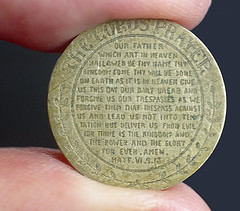
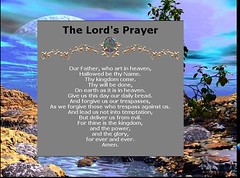
We can’t lose sight of the fact that God is the expert on life. God created our life; God created this world; God created all that exists. God as the creator knows what the best plans are to be. So we need to trust ourselves to God in this. As Psalm 37:3 tells us: “Trust in the Lord, and do good; so you will live in the land, and enjoy security.” If we want to experience the best that God has for us, then we must have the understanding and commitment to seek out and follow God’s will.

There is a wonderful poem by Annie Johnson Flint which says:

“God hath not promised skies always blue, flower-strewn

pathways all our lives through; …God hath not promised

sun without rain, joy without sorrow, peace without pain.

But God hath promised strength for the day, rest for the

labor, light for the way, … grace for the trials, help from

above, unfailing sympathy, undying love.”(The Tale of the Tardy Oxcart, p. 235, by Charles Swindoll)

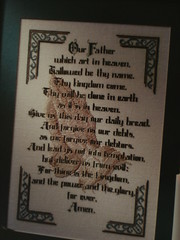
God’s desire for us is good. But we tend to doubt this. You might say that you believe this, but your actions speak louder than your words. For example, when you worry, you are not trusting that God can bring good to your life. When you make decisions apart from seeking God, you are not trusting that God’s way is the best way. When you want something that you know God doesn’t want you to have, and you get angry at God, you are doubting that God desires good for you. As the apostle Paul tells us in Romans 8:32- “He who did not spare His own Son, but gave Him up for us all, will he not also give us all things with Him?” Jesus wants us to understand that God knows what is best, and we need to seek God in all that we do in life. “Our Father, who art in heaven, hallowed by Thy name. Thy kingdom come, Thy will be done on earth as it is in heaven…”