Wednesday, February 13, 2008

Do We Know How To Pray?- Part 8

The next phrase of the Lord's prayer says "Forgive us our debts, as we forgive our debtors." There are 2 parts to this statement: being forgiven, and forgiving others.
Jesus tells us to pray for forgiveness. But before they can pray this, they must understand that they need to pray it. That is to say that they have to have a sense of the fact that there is sin in their life.

The trouble is, most people have a wrong conception of sin. They think that those who commit crimes, those who are hurtful to others, those who don’t live respectable lives (whatever respectable means), these are the people who sin. So many people don’t believe that sin has anything to do with them. “As long as I live a good life, I’m okay,” they think.

We all have things we do that affect others negatively, or that hurt others, or that bring some bad into the world. So when we pray “forgive us our sins,” we are acknowledging that we are not perfect, but in fact have sin in our life. And even more, we are acknowledging that only God, through Jesus Christ, can forgive our sins.
But along with being forgiven, we need to learn how to forgive. To understand about the forgiveness we receive from God, through Christ, really comes once we learn how to forgive others. This
phrase reminds us that we will be forgiven in proportion to how much we forgive others. So if we refuse to forgive others, or can’t bring ourselves to forgive others, then God will not forgive us. This might sound harsh, but it really isn’t, because human forgiveness and divine forgiveness are linked with each other.
If all we do is ask for forgiveness, we will not understand what it means to receive it. But once we start giving forgiveness to others, we understand what forgiveness is about. We understand that it is not easy to forgive. We understand that it is overlooking the wrong that has been done. We understand we have to rise above the hurt that we feel from being wronged. And we learn that we must seek to understand the circumstances which caused this person to sin. If we cannot put things right with our fellow brothers and sisters of this world, then how can we expect to put things right with God? In forgiving others, we learn how to stop judging, and we learn how to forget. Only then can we receive the forgiveness that God has for us.
The Bible tells us that only Jesus Christ can provide for our physical needs, and our spiritual needs. Only in Jesus can we understand about the need to forgive others and receive forgiveness. Only in Jesus can the hunger of personal peace and meaning and purpose of life come about. May we understand today and always, that God is our provider, our sustainer, and the one who teaches us how to forgive and be forgiven.

Sunday, February 10, 2008

Do We Know How To Pray?- Part 7


In my last blog we talked about the phrase in the Lord's Prayer "Give us this day..." I talked about the importance of focusing on the day at hand, and letting any future days not cause us to worry; we are to give the future to the Lord, since we never know what future we may have.
Today I want to look at the end of this phrase "Give us this day OUR DAILY BREAD." First we looked at the word "daily," now we will look at the word "bread."

This word "bread" might appear to mean food, since we eat bread as a food substance. But did Jesus mean it to be used as a symbol for something greater, something significantly larger, something much more eternal? I believe so. So, let’s look at 3 items that will help bring this into better perspective.

1. Dependency- First, what matters most in our lives, in the eternal

perspective, is our dependency on God. One of the dangers of living in the society we live in, is that we can believe that we can make it on our own; that we are self-sufficient; that our future is in our hands; that we make our own destiny; that we are the providers of our own sustenance. But in doing this we forget about God.

The Israelites had this same struggle. They would turn away from God, their

LORD and creator, and forget how God had rescued them out of slavery from Egypt. Time and time again we read in the Bible how the Israelites had to remember the days of old and how God provided for them. When they did this, it caused them to again let themselves become dependent on God.

In teaching us to pray this simple petition, “Give us this day our daily bread,” Jesus is telling us to remember that God created us not for independence, but for dependence upon Him. Our future is not in our hands, but in God’s.

2. The basics- Secondly, when we pray for daily bread, it is referring to our

basic needs. In a time when society gets so focused on the exotic and the extravagant, usually at the expense of the impoverished, I think Jesus wants us not to forget the basics of life, and that God is there to provide for us in the most basic of needs.

God can use us to provide the basics. When we give to help those who are poor and in need, we trust God to use this giving as a means to help provide them the basics of life. In doing this, we are not hoarding our money, but sharing it with others, and we are answering this prayer for another human being.

3. Spiritual Sustenance- Thirdly, we have the basic need of spiritual

sustenance. We are more than just a body, we are a body and a spirit, and our spirit needs to connect with the Spirit of God. This is a need, and yet too many people turn a blind eye to this need; too many people think they don’t need to have a relationship with God. Just as when we eat physical food our body gets hungry again, so we are continually hungry for the spiritual food of worship, prayer, and God’s word.

EX. A number of years ago a man wrote into the newspaper, which started an important dialogue. He wrote that he didn’t think that sermons were important because he didn’t remember any of the sermons he ever heard. The debate went back and forth between those who thought sermons were important, and those who didn’t. Finally, the dialogue ended when one man wrote: “My wife has been cooking me meals for 20 years. I can’t remember most of the meals she has cooked for me, but I do know that eating them has kept my body healthy!”

There is a poem that says:

You cannot pray the Lord’s Prayer in the first person ‘I.’
You cannot say the Lords Prayer and even once say ‘My.’
Nor can you pray the Lord’s Prayer and not pray for another;
for as you ask for ‘daily bread,’ you must include your brother.
Yes, others are included in each and every plea;
from the beginning to the end of it, it doesn't once say 'Me.'

Wednesday, February 06, 2008

Do We Know How To Pray?- Part 6


Today I want to look at the third phrase of the Lord’s Prayer where Jesus says: “Give us this day our daily bread, and forgive us our debts as we forgive our debtors…” If we were to visualize the Lord’s Prayer in 2 parts, the first part would be what God may properly expect from us (things like respect for God’s holiness, commitment to God’s Kingdom, and obedience to God’s laws and will), and then the second part is what we may properly expect from God (things like provision for our physical needs, liberation from our bondage to sin, and deliverance from the powers of evil).
Let us first look at the word "daily," and then next time we will look at the word "bread." This request centers around the understanding the word “daily.” The Greek word that is translated as daily is the word episousios. It is a word that Jesus uses to help us understand that we should be concerned with today. Give us this for today, should be our request. We do not know what tomorrow holds, so why worry about tomorrow? Let us pray for God’s provision today, trusting that if tomorrow comes for us, then it is a new opportunity to turn to God and trust God.
As James tells us in James 4:14-15, “Yet you do not even know what tomorrow will bring… Instead you ought to say, ‘If the Lord wishes, we will live and do this or that.’”
Gregory of Nyssa, who lived in the forth century, once made this comment: “He who gives you the day, will also give you the things necessary for the day.”

Sunday, February 03, 2008

Do We Know How To Pray?- Part 5


Last time I talked about the phrase "Thy kingdom come, Thy will be done." It is only when we can each give up our will, and join together in seeking God’s will, that the Kingdom of God can be seen here on earth. Which brings us to the next phrase of the Lord's Prayer: "one earth, as it is to heaven. So how does God’s will come to earth as it is in heaven?

In the beginning of creation, God created all things, including people. And we see that this was taken from aspects of heaven. For example, the river of life that was in the garden of Eden, is in heaven flowing from the throne of God (Rev. 22:1). In Hebrews 9:24 it refers to sacrifice on the cross like the priest of the Old Testament who shed the blood of the sacrificial lamb to remove sins. The phrase here in 9:24 says: “For Christ did not enter the sanctuary made by human hands, a mere copy of the true one…” The true sanctuary is in heaven. Any sanctuary we have down here on earth is just a small likeness of what is in heaven.

So when Jesus says to pray… “On earth, as it is in heaven,” He is reminding us that God has a master plan, and things on earth are copies in part of what is in heaven. Just like a copy of a painting is not as wonderful and glorious as the original, so what we copy will never be as glorious. But it will be wonderful in its own way, because it is a following of what God has for us to experience.

We can’t lose sight of the fact that God is the expert on life. God created our life; God created this world; God created all that exists. God as the creator knows what the best plans are to be. So we need to trust ourselves to God in this. As Psalm 37:3 tells us: “Trust in the Lord, and do good; so you will live in the land, and enjoy security.” If we want to experience the best that God has for us, then we must have the understanding and commitment to seek out and follow God’s will.

There is a wonderful poem by Annie Johnson Flint which says:

“God hath not promised skies always blue, flower-strewn

pathways all our lives through; …God hath not promised

sun without rain, joy without sorrow, peace without pain.

But God hath promised strength for the day, rest for the

labor, light for the way, … grace for the trials, help from

above, unfailing sympathy, undying love.”(The Tale of the Tardy Oxcart, p. 235, by Charles Swindoll)

God’s desire for us is good. But we tend to doubt this. You might say that you believe this, but your actions speak louder than your words. For example, when you worry, you are not trusting that God can bring good to your life. When you make decisions apart from seeking God, you are not trusting that God’s way is the best way. When you want something that you know God doesn’t want you to have, and you get angry at God, you are doubting that God desires good for you. As the apostle Paul tells us in Romans 8:32- “He who did not spare His own Son, but gave Him up for us all, will he not also give us all things with Him?” Jesus wants us to understand that God knows what is best, and we need to seek God in all that we do in life. “Our Father, who art in heaven, hallowed by Thy name. Thy kingdom come, Thy will be done on earth as it is in heaven…”


Wednesday, January 30, 2008

Do We Know How To Pray?- Part 4


In this series on "The Lord's Prayer," I've been talking about how we are too selfish in the way we pray. The Lord's Prayer helps us to remember to pray: "Our Father." Our prayer is to be focused on God, not on ourselves. The God we pray to is holy, and has a name above all names. This God we pray to is the creator of all things, and has given us life and the world we live in.
Jesus then tells us to pray: "Thy kingdom come..."

The kingdom of God was central to the message of Jesus. When Jesus first appeared on the scene, He came “preaching the good news of the kingdom of God.” (Luke 4:43) But what does this mean?

It actually has 3 meanings; past, present, and future. In the past, we see the kingdom of God existing through Abraham, Isaac, and Jacob, and existing through the prophets. But it also had present meaning for Jesus. Jesus wanted us to know that the Kingdom of God was a present reality in Christ; it was here and now. And yet, the Kingdom of God also had future implications. There was an aspect of the Kingdom of God to come. It had meaning for when the end times would come; when heaven and earth would be done away with and a new heaven would come about. So Jesus, in using this phrase, tries to help us understand how the Kingdom can be past, present, and future.

To be in the Kingdom is to obey God’s will. The beauty of this understanding is that the Kingdom is not nations and countries, but you and me. We are each a part of the Kingdom, and together make up the Kingdom. The Kingdom makes a demand of us to give ourselves over to God’s will. It requires selflessness on our part; we must give up our selfish desires and wishes to be able to seek God’s will. It is only when we can each give up our will together, and join together in seeking God’s will, that the Kingdom of God can be seen here on earth. Which brings us next to seeing how God’s will comes to earth as it is in heaven, which I will talk about in my next blog.

Sunday, January 27, 2008

Do We Know How To Pray, Part 3


I want to continue today to look at "The Lord's Prayer," and what it says to us about prayer. Last time I left off talking about how this prayer teaches us that we are to pray "to the Father, through the Son (that’s why we close prayers 'in Jesus’ name'), by the power of the Holy Spirit."

Too often our prayers are about wishing for all the selfish things we hope would come true in our lives. Our lives are infected with selfishness. And if the Lord’s Prayer tells us anything about ourselves, it tells us that in every culture, selfishness is one of the most common bonds we share with everyone. We are concerned with the question: “What’s in it for me?” And Jesus tells us that it isn’t about us, it is about God and our relationship to God and our relationship with God.

In Matthew 6:8, Jesus reminds us: “For your Father knows the things you have need of before you ask Him.”/ God knows our needs and wishes. The purpose of prayer is not to be focused on our selfish needs, but to trust God, and be with God, and seek God more deeply. In His travels, Jesus encountered people who only cared about themselves and their own needs. And so in His teaching the disciples about prayer, and in teaching us to pray, Jesus begins the prayer, and continues every petition in this prayer, by directing our focus and attention towards God. Jesus is showing us that we can’t really pray if our focus is wrong.
The Bible is there to remind us that we can’t make it without God. In fact, we were not created to separate ourselves from God, but rather to be in close communion with God. If we spend our lives developing self-reliance from God, ultimately we are not going to make it. We may make it big on earth, according to the world’s terms, but we will lack real purpose and satisfaction in life. We will always have a void, a hole in our lives that won’t be filled, because that hole can only be filled with God’s Spirit. And in that day when heaven and earth as we know them pass away, and only heaven and hell exist, what will we do then? Jesus says it this way in Matthew 16:26- “For what will it profit a man if he gains the whole world and forfeits his soul? Or what will a man give in exchange for his soul?”
The better our companionship with God, the better our companionship with others will be. That’s what this prayer does, it helps us to focus on God and our relationship with God. We cannot make it all alone. Jesus knew this, and in teaching us to pray the Lord’s Prayer, and in starting the prayer this way “Abba—Father—Daddy,” He tells us that neither does God want any of us to seek to go it alone. God is a perfect Father; one who desires companionship with us, and reliance from us in Him.
As we pray in God's
name, we can know it is a name that we can rely on, and to whom we can speak.


Thursday, January 24, 2008

Do We Know How To Pray?: Part 2


In my last blog, I gave a general overview of the Lord's prayer. Today I want to start looking more in depth at what this prayer is really saying, and how Jesus is teaching us to pray. The Lord's Prayer opens with these wonderful words: “Our Father…” In this opening salutation, Jesus wants us to understand that we should call to God in a very personal way; we should know God in a very personal way. The word “Father” is the Aramaic word “Abba.” This word is very personal and intimate, because it can be translated as “daddy.”

In our culture today, one of the first words a baby speaks is the word “daddy.” In Jesus’ time and culture, that word was “abba.” This was a society in which the father was expected to be the spiritual leader of the entire household; a society in which the father provided for the majority of the needs of the family; a society where a family’s identification in the community was established primarily through the father.

When Jesus used this word “abba,” father, His purpose was to establish, to clarify, and then to invite each one of us to celebrate the wonderful relationship God wants to have with each one of us. Now this was a very new way of praying. This was not how the religious people of that time were accustomed to praying. One Christian writer remarking about this new kind of intimacy said: “What an incredible revolution Jesus started when He used this word ‘abba’ to describe our relationship with God.” For a community whose prayers had always reflected great distance between themselves and God, Jesus introduced to them the immediacy, and thus the intimacy of a caring God.

God is no longer to be thought of as someone who cannot be reached. God is to be thought of as a loving parent. As a parent, I would be greatly distressed if my children kept distant from me. It is the same with God. God created us, and loves us, and wants to have a special relationship with us. Jesus tells us straight out that this relationship is to be intimate and special like you should have with a loving earthly father.
But along with using such a personal name as
“abba” to help us understand the personalness of God, and of this prayer, this opening “Our Father” also seeks to help us understand the focus we are to have in our prayers. The focus is to be on God. Just as Jesus offered His prayers to the Father, so He tells us to direct our prayers to the Father. Our prayers are to be to the Father, through the Son (that’s why we close prayers “in Jesus’ name”), by the power of the Holy Spirit. And in praying this way, we are reminded that the focus is not on ourselves, but on the God to whom we are praying, and seeking, and relying on.
Next time I will continue on the relationship between praying to "our Father" and being selfish.

Thursday, January 17, 2008

Do we know how to pray?


Do we really know how to pray? We know how to ask for things. We know how to get frustrated when God doesn't give us what we want, the way we want it, and in the time we want it. But prayer is more about seeking God's wisdom, listening to God, and giving ourselves over to God. It is more than taking time out of our day for a particular "time" of prayer. It is about communing with God throughout the day. (For more on this you can see my blogs on "The Practice of the Presence of God," June 21, 2007 - October 24, 2007)
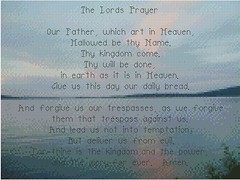
The disciples realized that they didn't know how to pray. So they specifically asked Jesus to teach them to pray in Matthew 6:9-13. Jesus' answer has become known as The Lord's Prayer. 9"This, then, is how you should pray:
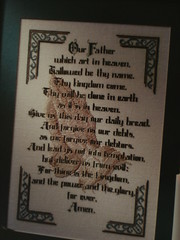
" 'Our Father in heaven,
hallowed be your name,
10your kingdom come,
your will be done
on earth as it is in heaven.
11Give us today our daily bread.
12Forgive us our debts,
as we also have forgiven our debtors.
13And lead us not into temptation,
but deliver us from the evil one.'"
It is a prayer that reminds us of the holiness of God and God's name, the importance of seeking God's will and God's purpose, the understanding that our basic needs are provided by God, our need to be forgiven and to forgive, and seeking God to help us from succombing to temptation. While it is good to know and pray this prayer, it should also be used as a guideline of what prayer is (a communing between us and our creator), and the kind of things we should pray for. Do you notice that there isn't any praying for material possessions, or for fame or success?
In my next blog I will continue this discussion. Tell me what you think.

Sunday, January 13, 2008

Taking Away the Decorations


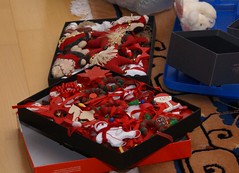
I know that Christmas is a couple weeks past, but I was thinking today about how there is a tendency to let the Christmas spirit fade away once we have taken the decorations away. I love the decorations of Christmas. It brings such a festive atmosphere, but can also bring a let down once they are put away.
However, stated in an article by Vern Farnum, called "De-Decorating," he says: 'De-decorating is our way of getting back in touch with the routine reality of daily life. As we take down the lights and signs of the Christmas season, I hope we will not box away our faith with the decorations. Instead, may we carry with us the lessons of the season as we step back into real world.' "
I believe this is true. First, if it were Christmas all year long, we would lose touch with the more simple aspects of life. Life can't be all decorations, and partying all year long. However, second, we do need to keep with us the love, hope, joy, and peace that Christmas reminds us of. We do need to make sure that we keep the lessons of Christmas (the coming of God into the world to save us from our sins) in the forefront of our minds.
So, as we have now left Christmas, may we seek to remember what Christmas has taught us, and keep this spirit in our every day lives.

Thursday, January 10, 2008

Does God want us to be happy?


People seem to place a lot of weight on being happy in life. Even the greeting "How are you doing?" seems to imply whether you are happy or not. So many people work so that they can have the money to "enjoy" life. But there is an important fundamental question: Does God want us to be happy?
I think the answer to this question is "not necessarily." As C. S. Lewis once said, "God isn't concerned with if we are happy or not. God wants us to love, and be loved." But loving and being loved isn't the same as being happy. Because there is pain in life, there will still be love, but not necessarily happiness.
So what do we do with this? If God isn't overly concerned with our happiness, then we shouldn't be either. And the truth is, the less we worry about happiness, the better off we will be. We should have the thinking that the apostle Paul tries to tell us in Philippians 4:4, "Rejoice in the Lord always, again I say rejoice." At the heart of rejoicing in understanding that God is with us in all circumstances. So whether we are happy or not, we rejoice because we know God walks with us.
Let us try and rejoice more, and worry less about happiness. In the end, God's blessings will carry us through. Let me know what you think (pastorchrislogan@yahoo.com).

Sunday, January 06, 2008

Epiphany

Epiphany , meaning 'appearance' or 'manifestation', is the day many Christians use to celebrate the "shining forth" or revelation of God in human form, in the person of Jesus. Some Christians commemorate the visitation of the Magi to the child Jesus on this day. As this is Epiphany Sunday, I wanted to talk a little about a wonderful revelation we find in the Christ child.

There comes a time in life when we realize that we aren’t always strong, or smart or we don’t always win the game. In fact, we often feel weak, and bumbling, and look at only our failures. And so when it comes to living our lives, we go through these periods where we don’t feel too great about ourselves; where we don’t think we have that much to offer.

But in Christ, we can understand a great truth… God can actually use us all the more when we are weak. The apostle Paul tells us in 1 Corinthians 12:10- “For Christ’s sake, … when I am weak, then I am strong.”
There were many who thought Jesus to be weak and foolish. There were (and still are) many who don't understand Jesus' birth and death, and think Him weak (that God would even consider taking on flesh, and allowing humans to kill him). But the apostle Paul tells us something wonderful in 1 Corinthians 1:25, "God's foolishness is wiser than human wisdom, and God's weakness is stronger than human strength." And also in 1 Corinthians 1:27, “But God chose what is foolish in the world to shame the wise; God chose what is weak in the world to shame the strong.”
As the magi traveled a long journey to receive the truth of the Christ child, understand this: whenever you feel weak, or humbled, or like a failure, know that in Jesus, your weakness can be used for something great when you partner with God. So don't fret, "if God is for you, who can be against you."

Thursday, January 03, 2008

Security


We all want to be safe, protected, and secure. But so often the ways we look for this doesn't work. We think that if we have a good job, we will be secure. But what if we lose the job? We think that if we have good health, we are secure. But what about when our health fails us? We think that if we are financially secure, all will be well. But life is more than being secure in these ways. Our only real security can be found in the One who created us; God.
This last year I again decided to read the devotional "My Utmost for His Highest," by Oswald Chambers. On the last day of 2007 he talked about security. Let me share a little of what he wrote:
Security from Yesterday. "...At the end of the year we turn with eagerness to all that God has for the future, and yet anxiety is apt to arise from remembering the yesterdays. Our present enjoyment of God's grace is apt to be checked by the memory of yesterday's sins and blunders. But God is the God of our yesterday's, and He allows the memory of them in order to turn the past into a ministry..."
Security for To-morrow. " 'For the Lord will go before you.'...God's hand reaches back to the past and makes a clearing-house for conscience."
Security for To-day. " 'For you shall not go out with haste.' As we go forth into the coming year, let it not be in the haste of impertuous, unremembering delight, nor with the flight of impulsive thoughtlessness, but with the patient power of knowing that the God of Israel with go before us..."
Security comes from knowing that God is the God of our yesterday, today, and tomorrow. With God on our side, we have nothing to fear. We can live each day knowing that God has our best in mind, and will guide us into a wonderful life that God has envisioned for us.

Sunday, December 30, 2007

New Year's Resolution


As we come to the close of 2007 and think about the coming of 2008, inevitably we begin to think about New Year's Resolutions. These are popular with so many, because they challenge us to be even better than we were the year before. But the question that is always there is: What will my resolutions be? You can always go with the popular ones like diet, exercise, go to church more, spend more time with family, etc..
Here is a twist on the whole New Year's Resolution; become more of who God created you to be. And to do this, we can think about Proverbs 6:16-19, which says, "There are six things the LORD hates, seven that are detestable to him:17 haughty eyes, a lying tongue, hands that shed innocent blood, 18 a heart that devises wicked schemes, feet that are quick to rush into evil, 19 a false witness who pours out lies and a man who stirs up dissension among brothers." There are seven things that we are prone to do: be prideful, lie, hurt others, be deceitful, get ourselves into trouble, be a false witness against another, and stir up dissension.
As you look over this list, you might not be one who breaks them all, but to some degree or another, they exist in our lives. What if we sought to do better in these 7 areas in 2008? Not only would our life be better, but all those around us would be better off as well. So which are the areas where you struggle the most? Pride? Being deceitful? Making decisions that get you into trouble? What can you do to improve in that area? I challenge myself and you to pick at least one, and let's do better in 2008. May God bless us in our endeavor.

Thursday, December 20, 2007

The Perfect Gift


One of the aspects of Christmas is that of opening gifts. It might be a little odd that we get to open gifts on somebody else’s birthday (Jesus'), but this receiving of gifts is really an offshoot of the whole spirit of giving. As we give, we also receive, and thus we get to open gifts! What is it that you are wanting this Christmas? If you are like me, you get to a certain age where you really don’t need anything anymore. But what would you want if you knew the cost didn’t matter? Some might say a new car, while others might say better health. Hey, if there is no limitation, what about a jet or a trip to space? But there is a perfect gift that we can receive, and the perfect gift that can be given.
The perfect gift is more than something material. And while health for ourselves and our family would be nice, and world peace would be great, those still aren’t what would make the perfect gift….There is a Christmas card, that we received this year, that says it well, “If our greatest need had been information, God would have sent us an educator; if our greatest need had been technology, God would have sent us a scientist; if our greatest need had been money, God would have sent us an economist; if our greatest need had been pleasure, god would have sent us an entertainer; but our greatest need was forgiveness, so God sent us a savior.”
Our greatest need is to have our sins forgiven, and for that we need a savior.
This is what Christmas is all about; God coming into this world, in the form of a baby, to live among us, and show us how to live and to love. But even more, this baby, Jesus Christ, would grow up and become our savior, so that we could be forgiven and saved from our sins. Jesus said this as well in John 8:24, “I told you that you would die in your sins; if you do not believe that I am the one I claim to be, you will indeed die in your sins.”
Everybody is going to die physically, but what Jesus is talking about is dying spiritually. When we do not have Jesus as our Savior, we will go through a spiritual death.
What is a spiritual death? Spiritual death is having our spirit eternally separated from God. Romans 6:23 says, “For the penalty of sin is death, but the free gift of God is eternal life in Christ Jesus our Lord.”THIS IS A FREE GIFT TO US. IT IS THE PERFECT GIFT FOR US. GOD SAYS, “HERE IT IS; THIS IS FOR YOU!” Will you receive it?
But along with understanding what the perfect gift is for us to receive, we need to also know what is the perfect gift to give. It is the gift of helping people understand the Christmas story. EXAMPLE- Barna is a group that takes poll of different religious questions. Just recently they did a sample poll of over 1000 people. One of the questions they asked was whether or not people believed in the virgin birth (that Mary was impregnated by the Holy Spirit). In response, 66% of upscale adults, 53 % of those who don’t go to church, and 60% of those who are liberal on political and social issues said that they believed in the virgin birth. However, only 15% of those who are atheist or agnostic said they believed. NOW, even though there is a majority in many of the categories, there are still a lot of people who don’t believe.
Because there are many who don’t believe, it will take someone like you and me to help them know, understand, and believe. They need to understand that the most perfect gift that they can receive is forgiveness from their sins from Jesus, their savior. There is no greater gift than eternal life. But they won’t have it until they receive it.
Let us give thanks to God for the perfect gift He gives to us, and let us remember this gift on Christmas Day as we talk about Christmas with our families. Share the true meaning of Christmas!

Sunday, December 16, 2007

Fear


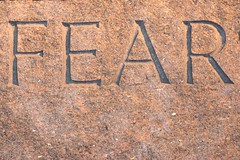
FEAR. It is a word that catches our attention. In fact, when someone is afraid of something, it is usually termed a phobia. The list of phobias is quite long; from agoraphobia (fear of open spaces or crowds), to necrophobia (fear of death or dead things), to xenophobia (fear of strangers or foreigners). According to the American Psychiatric Association, a phobia is an irrational and excessive fear of an object or situation. In most cases, the phobia involves a sense of endangerment or a fear of harm.
So a phobia is a fear that has become irrational. We have imagined that this person, or situation, or object can cause us harm or endangerment. And yet, fear itself is not irrational. For example, fear can keep us from just walking up to a snake that could indeed cause us harm; fear could keep us from acting out in a way that is harmful; fear could keep us from getting involved in a relationship that could be hurtful.
Often times, if we choose to face our fear, we find that we are no longer afraid. But even more, we have a place to go to calm our fears, and that place is God. If you were to study the Bible at all, you would see that there is a God who is personal, loving, and present. This God wants us to know that we don't have to fear. As Isaiah 35:4 says to those with fearful hearts: "Be strong, do not fear; your God will come, he will come with vengeance; with divine retribution he will come to save you." Also, Isaiah 41:10, " So do not fear, for I am with you; do not be dismayed, for I am your God. I will strengthen you and help you; I will uphold you with my righteous right hand."
What causes you to fear? It is important to note whether or not these fears are rational, or irrational. But either way, if you give them to the Lord, the Lord will help you to overcome them, and help you to turn them into opportunities for growth and blessing.

Thursday, December 13, 2007

Helping Others


During the Christmas season, it seems that people are all the more willing to help others. People want to give a little extra money to someone who is hungry, or buy gifts for a family that is struggling. But shouldn’t this attitude of giving be one that exists throughout the year? Shouldn’t people have this ongoing desire to help?

One thing that seems to happen at Christmas, is the opportunities to help are more pronounced. During the holidays of Thanksgiving and Christmas, organizations like Salvation Army and Rescue Mission do extra mailings, and express a need for extra help. So people tend to be more aware of the need at the holiday time.

But the truth is, the need is always there. There are always people who are struggling; always people who are homeless; always people who can’t pay a bill or buy a meal. Our church is currently partnering with WomenShelter of Long Beach (an organization that helps those who are suffering from domestic violence). There is a great need during Christmas. But this need will continue all the more after Christmas. We are searching for ways to be able to partner and help on a long term basis.

Jesus told us in Matthew 25:35-36, “For I was hungry and you gave me something to eat, I was thirsty and you gave me something to drink, I was a stranger and you invited me in, 36I needed clothes and you clothed me, I was sick and you looked after me, I was in prison and you came to visit me.'” After saying this, the people were confused how they had done this. And then Jesus says to them in Matthew 25:40- “"The King will reply, 'I tell you the truth, whatever you did for one of the least of these brothers of mine, you did for me.’” We need to help others, because it is what God would have us to do. When we choose to not help, we give in to our selfish desires, and withdraw from the world in which God has placed us; we become disconnected from our surroundings.

Let us take this attitude of giving, that is prevalent at Christmas, and keep it with us throughout the year. Tell me what you think (pastorchrislogan@yahoo.com).

Sunday, December 09, 2007

The Emotions of God


The other day I was reading my Bible, and came across John 11:35, which says: "Jesus wept." This verse refers to Jesus finding out that Lazarus was dead, and with this news He weeps. What a great sign of the emotions of God. Remember, that Jesus is God in the flesh; the likeness of God to us. As John 1:14 says, "The Word became flesh and dwelt among us, and we have seen His glory, the glory of the One and Only..."
As God's likeness, we see that God has emotions. This shouldn't surprise us, since we are made in the image of God. But it is wonderful to know that God has emotions, because it shows us that God is personal. God does care about what happens to us, His children. God is not just some impersonal force or deity.
What might this mean for you and me? It means that when we are feeling down, God wants to be there to help build us up. It means that when we are excited, God is jumping for excitement with us. When we are overwhelmed with grief, God is there crying as well. It means that we are never alone in what we feel!
I hope that you try to really process this. God has not left us on our own. God will never abandon us. In fact, as we make our way towards Christmas, we should remember that God took on flesh, in the form of a baby, Jesus Christ, to come and live with us, AND die for us. Christmas is really about God caring about what we feel, and who we are, and what we do.
SO, the next time you feel an emotion, remember that God is right there with you! Tell me what you think (pastorchrislogan@yahoo.com).

Thursday, December 06, 2007

The Golden Compass

The Golden Compass is an "adaptation of the Carnegie Medal-winning novel by Pullman, the first volume in the His Dark Materials trilogy. In a parallel Oxford, young Lyra Belacqua begins a dimension-crossing odyssey that builds from a merely atypical children's adventure into a complex (and frequently quite dark) philosophical epic." [Synopsis written by Tom Aylward-Nally (found on the Internet Movie Database: IMDB)]
From the reports that I've heard, this movie is a fun and adventurous tale. Starring Nicole Kidman and Daniel Craig and backed by New Line Cinema, the movie is well done and will be entertaining. But it is interesting that they are seeking to downplay the atheistic messages that come through in the book. Because it is seen as a children's movie (much in the vein of "The Chronicles of Narnia), children will no doubt be interested to read the books. This is not a good thing, since Pullman promotes such anti-God views.
Christianity Today says this in their review (for the full review see http://www.christianitytoday.com/movies/). "Pullman has painted a picture of the church—represented by "The Magisterium" in his stories—that basically reflects only those ways in which the church has abused power. And he has used that selective reflection as an excuse to write off Christianity as a whole... Pullman points to bad people as a way of saying that the faith is wrong. For examples of religious folk, he illustrates people who abuse power. That's not God. And Christ would frown on the persecution carried out by The Magisterium."
I personally will not be taking my kids (8 and 11) to see the movie, nor will I let them read the books. Each person will decide if they want to see the movie (or read the books), and each parent will have to reflect on whether or not it will be beneficial to expose their children to this. If asked for my opinion, I will discourage people to see it. However, if you do go to see the movie, I hope that you do so with Jesus Christ in tow, so that you might allow your thoughts to interact with what the truth of Scripture says.

Monday, December 03, 2007

Partnering


Books are wonderful to stimulate our thinking, and challenge us in life. I have been encouraged by a book titled “The Externally Focused Church,” by Rick Rusaw and Eric Swanson. This book is about challenging churches to go beyond their four walls, and seek to confront and cooperate with their communities. It is about partnering with other organizations that are doing a good work, so that they can do an even better work. It is about taking our faith, and making it practical.

On page 216 of the book, the authors say this: “In this book we’ve described some of the ways God is moving the church beyond the four walls of the building and into the community. And we’ve described some of the results: people coming to faith, lives are being changed, and Christians are growing. But we really believe that the best years for the church are still ahead, and the best ideas have yet to be invented. The challenges and opportunities are too massive to rely on old, tired methodologies.”

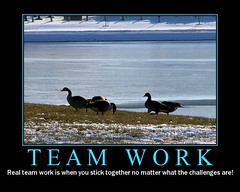
Churches are just getting to the place where they realize they don't have to do everything by themselves; there are some things that will happen better if we work together and work as a team for the kingdom of God. This is especially true for smaller churches who don't have a great amount of money or resources. But it will also be very beneficial if big churches choose to partner with smaller churches. This becomes a mission for the bigger church, and allows smaller churches to be connected with ministry they couldn't do on their own.

As Rusaw and Swanson say: "To create a different future is going to take leaders with the vision to see, the passion to feel, and the courage to do. These leaders must keep pressing forward despite inevitable squalls, adjusting the rudder and the sail as they go." This journey is not meant to be one we walk alone. God calls us to be partners in the ministry to people around us. This should happen with churches partnering with other churches, and churches partnering with other organizations. If we do this, God will do great things! Tell me what you think.

Thursday, November 29, 2007

Role Models


A couple of weeks ago I was reading the commentary by Pamela Hale-Burns in the Saturday Long Beach Press Telegram religion page. She was talking about how she had been criticized for her commentary's on celebrities not being good role models for our children, and for speaking out against how some middle school's were providing birth control for girls without their parents knowledge.
She said: "Well, in the midst of the calls and the e-mails there were two that stood out that I felt deserved a response.... In regards to the celebrities, I was told by a fellow Christian that I shouldn't criticize the world and just love them. I didn't criticize anyone...I encouraged parents to be the example of a good role model for their children so they wouldn't have to look up to these celebrities... Another reader says that when it comes to children and birth control I should take my head out of the sand...Today's children are going to have sex regardless of how they are raised... Pamela Hale-Burns then says: 'Let's stop telling our children that they are going to fail no matter what and encourage them that it can be done. Let them know they can succeed by making right choices...My head is out of the sand and my ears are cleaned out and what I'm hearing and seeing is the world is giving up on our kids...'"
As I read this article, I was saying "amen" to what Pamela Hale-Burns was saying. Unfortunately, people no longer want to speak out, because they are afraid of being attacked by those who don't want to abide by how God calls us to live. God doesn't want us to give birth control to our teenagers; God doesn't want our kids to look to celebrities as their role models! God wants parents to be parents, and to give their kids high morals and standards. God wants us to encouraging each other to raise our kids right. As Hebrews 10:24 says, "Let us consider how we may spur one another on toward love and good deeds."
I want to challenge anyone who reads this to be willing to be bolder, and to speak up for who God is, and for how God wants us to live, especially when it comes to our children!
Tell me what you think. (pastorchrislogan@yahoo.com)